
Start an Essex County Property Records Search
Four offices share the work. The Commissioner of the Revenue keeps assessments, the Circuit Court Clerk records deeds, the Treasurer collects taxes, and county GIS publishes the parcel map. Start with the Vision assessment search when the question is which tax parcel matches an address or an owner. Then carry the parcel ID, the map-book-lot key, or the legal description into the next system. Deeds and other land instruments live in COVERS and Virginia Secure Remote Access. Balances and payment status belong to the Treasurer. The county map adds location and parcel shape.
That sequence builds a cross-check, not a title opinion. An assessment card names the tax owner and value; a deed records a conveyance; a map gives a reference view. Each updates on its own schedule. When records conflict, read the legal description and the recording reference, then ask the clerk or the Commissioner to confirm the official record.
- Search an address or owner in Vision's Essex County Property Lookup, then note the PID, Mblu, situs address, owner, and legal description.
- Open the matching deed reference through the clerk's COVERS/SRA index; compare the grantee, grantor, recording date, and land description.
- Check the Treasurer's account for the tax bill and payment status. A tax balance does not establish who holds title.
- Use the county GIS Webmap to orient the parcel, review zoning or flood context, and find nearby parcel identifiers.
- For a missing image, older volume, certified record, or parcel correction, contact the custodian rather than treating an online gap as proof the record does not exist.
Where Essex County Keeps Property Records
A deed, an assessment, a tax payment, and a parcel map answer different questions, so Essex County keeps them in separate offices. The Circuit Court Clerk records land instruments. The Commissioner of the Revenue maintains the assessment side. The Treasurer handles collection, and county mapping staff publish parcel data and explain how to report errors.
Essex Circuit Court Clerk
305 Prince Street
Tappahannock, VA 22560
804-443-3541, 8:30 a.m.-4:30 p.m.
Commissioner of the Revenue
Essex County's chief local assessing officer
Office contact through the county directory
804-443-4737
Essex County Treasurer
321 Prince Street; mail: P.O. Box 489
Tappahannock, VA 22560
804-443-4371
Vision Fields for Essex County Property Records
The Essex County Vision form accepts several keys. Its Mblu mode breaks an identifier into several fields. These include Map, Map Cut, Block, Block Cut, Lot, Unit, and Unit Cut. PID serves as a direct parcel key. Acct# works as an account key. The portal also offers Address, Owner, and All modes alongside these keys. Match behavior is not spelled out. Try a shorter name or address variant when a full entry returns nothing.
Treat the assessor form as a finder, not a deed index. Once a result opens, copy its PID and legal description before moving on. Preserve punctuation and leading zeros in a segmented Mblu entry. The parcel data also exposes TaxLabel and TaxLookup. They help join map and assessment references without guessing how a parcel number should be reformatted.
The Vision Property Lookup screen shows all the Essex County search modes on one form. Its fields help you pick a useful starting key. A match still needs checking against the underlying deed and map.
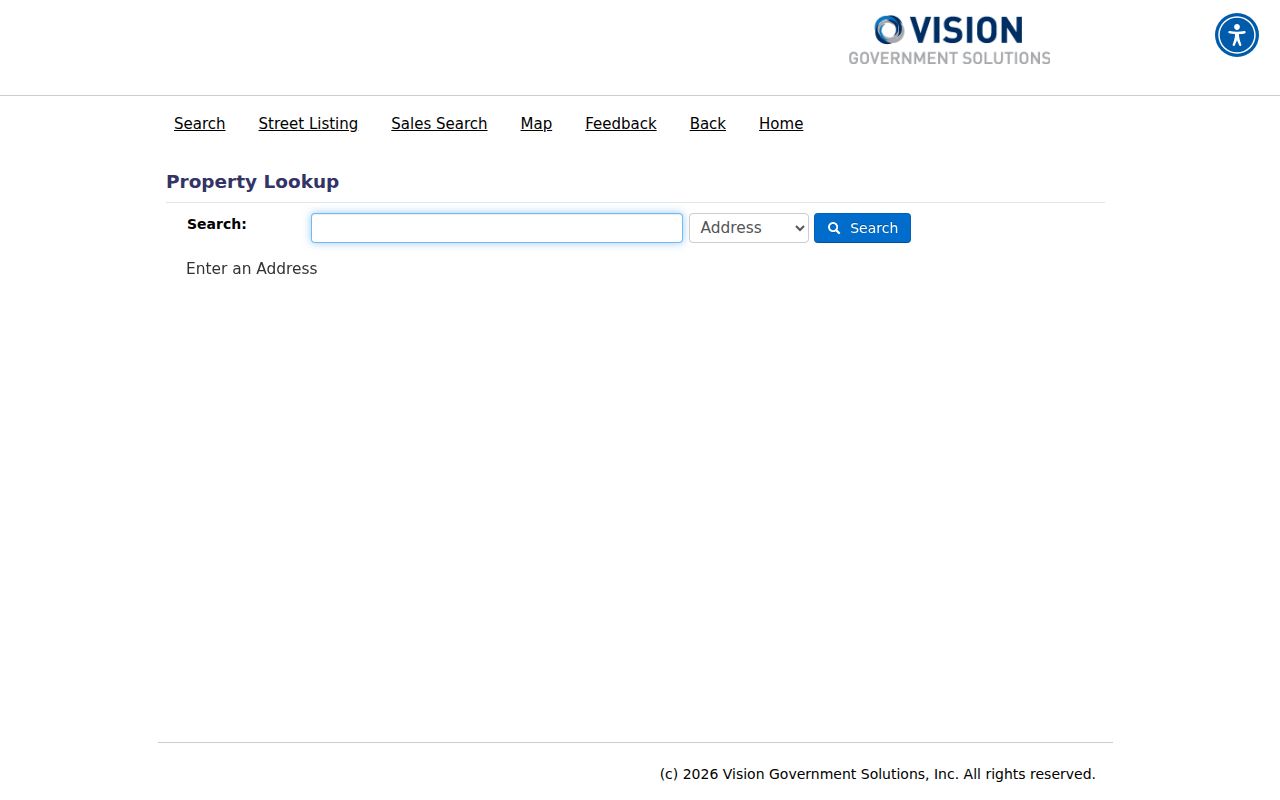
Use one parcel identifier across the owner card, the tax account, and the county GIS layer.
Essex County Deed Records in COVERS and SRA
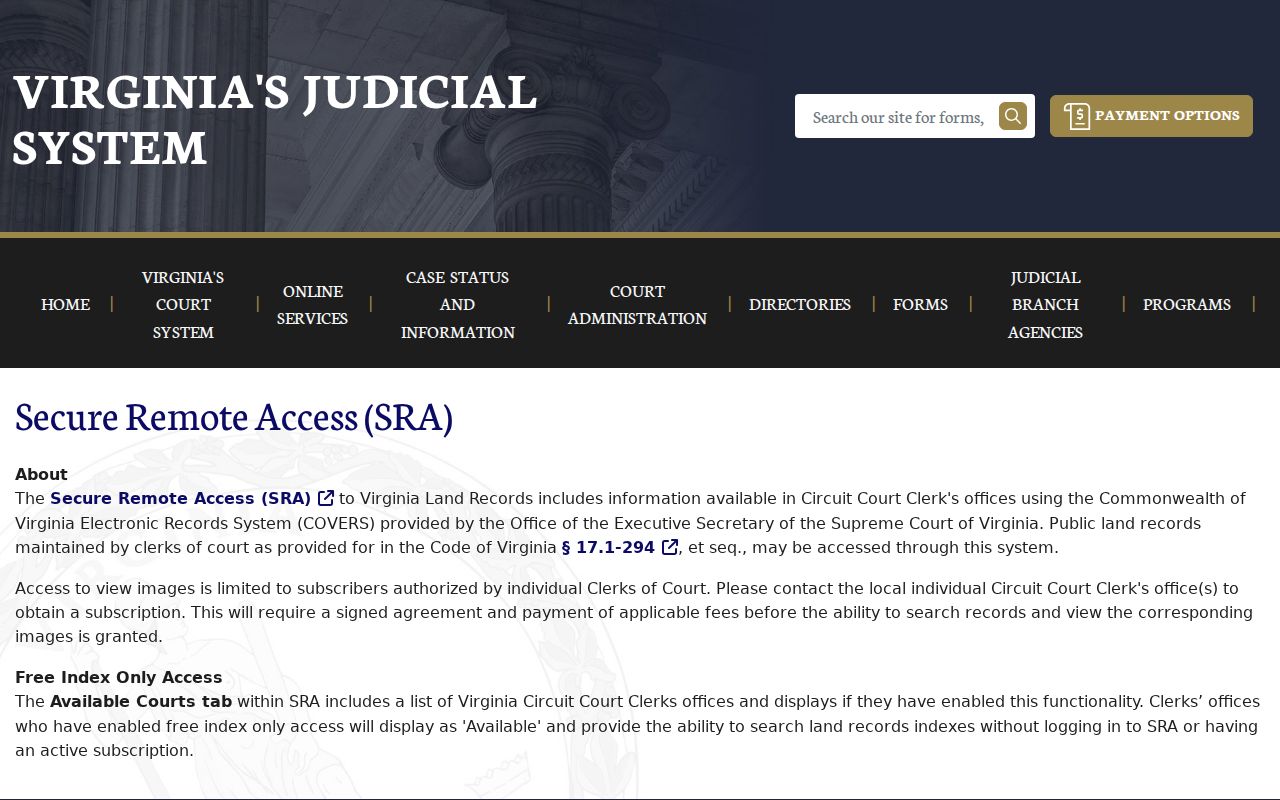
The Circuit Court Clerk records deeds, deeds of trust, refinances, assignments, easements, powers of attorney, satisfactions, plats, covenants, and foreclosure deeds. Essex uses COVERS for indexing and scanning. The state judiciary supplies the Secure Remote Access system. The land-records page states that Essex does not currently accept electronic recording. It names no earliest year for online coverage. SRA coverage varies by clerk. So not every document appears as an online image.
Index-only access may be free where Essex enables it, while images require a clerk-authorized subscription. In-person inspection remains available during office hours, and clerk copies run fifty cents per page. When a result is absent online, contact the clerk. Bring the parcel description, party names, and likely date range. A blank search never proves an instrument went unrecorded.
The Virginia SRA page explains the split between index lookup and image access. Its display makes clear why an index hit and a viewable document are separate steps.
Check the clerk's land-record page for local copy rules and for word on whether a needed instrument is available.
Essex County Parcel Maps Are Reference Layers
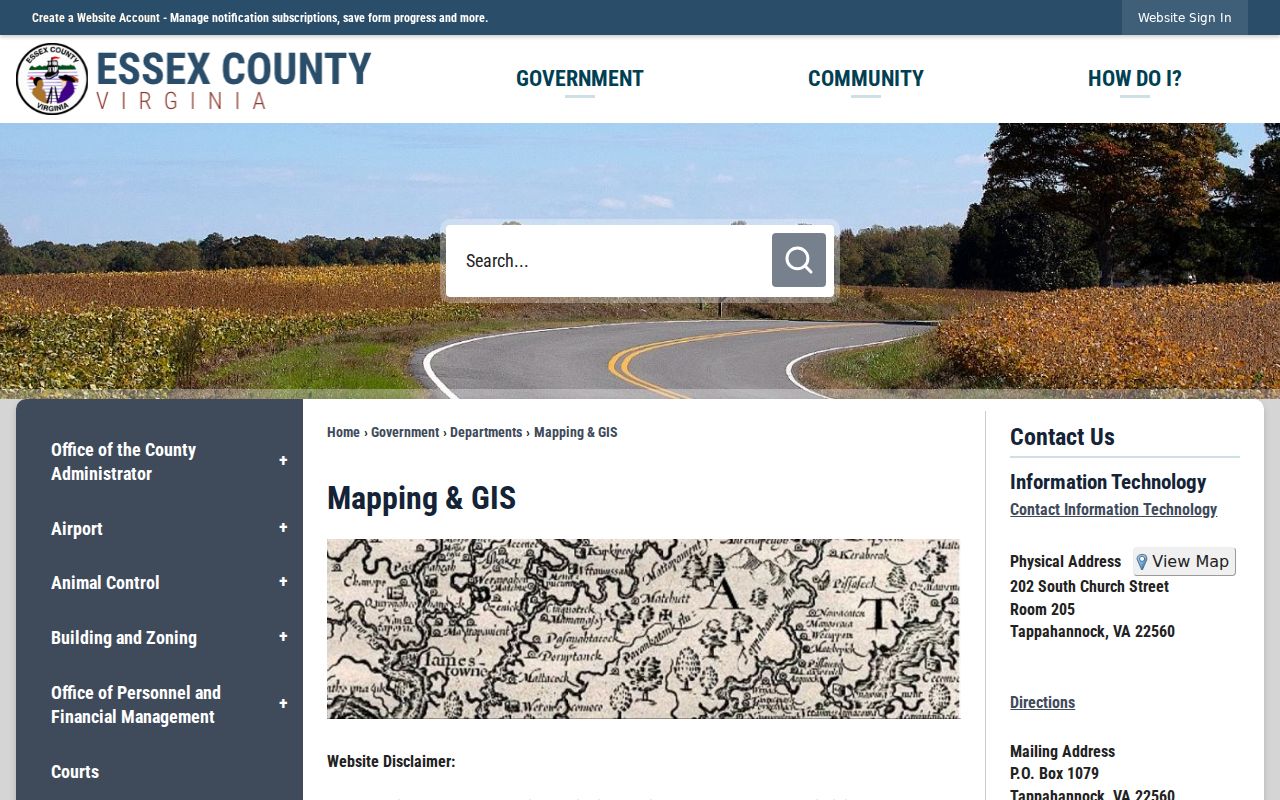
The county mapping page links the public GIS Webmap. It also explains what to do when a mapped parcel lacks data. The map can show parcel shape and size, ownership fields, zoning, and flood mapping. The county warns that GIS information comes from changing public records. Accuracy is not guaranteed. The map is neither a survey nor a legal representation. Use it to orient a search. Do not set a fence, easement, or building line from it.
A shape may be missing or outdated. In that case, the county recommends the Vision property card as a fallback. The published ArcGIS parcel service also warned that geometries were being updated. Its metadata dates the tax-parcel data from the Commissioner to July 31, 2026. A polygon may look wrong. Compare the current assessment card with the recorded plat and deed. Then send a correction question to county GIS.
The Essex County Mapping and GIS page states the limits directly and links the Webmap. The parcel layer gives a visual reference. The recorded description remains central to any boundary review.
When shape and deed text disagree, ask the clerk or a licensed surveyor to settle the boundary.
Which Essex County Property Records Answer Each Question
One property question rarely fits inside a single record. The Clerk's index documents recorded instruments. The Commissioner values land for the assessment roll. The Treasurer tracks collection and payment status. GIS locates the parcel and lets you compare its mapped shape against the assessment identifiers, while county and town zoning files describe permitted use and planning actions.
| Record Type | What It Documents | Kept By | Access |
|---|---|---|---|
| Deeds and land instruments | Transfers, easements, plats, deeds of trust, assignments, satisfactions | Circuit Court Clerk | Office inspection; SRA index/images by access tier; copies $0.50 per page |
| Assessment card and land book | Owner of record, property characteristics, assessed land and improvements | Commissioner of the Revenue | Vision search; downloadable property books for listed years |
| Tax account | Bill, payment status, and collection balance | Treasurer | WIPP, office, mail, or drop box |
| Parcel and plat | Map shape, parcel key, lot layout, legal description | County GIS and Circuit Court Clerk | Webmap for reference; recorded original plat through the clerk |
| Zoning and permits | Use rules, town forms, subdivision and historic-overlay review | County or Town of Tappahannock | Town forms and county zoning pages; no completed permit register located |
Match the record to the job. Title work calls for the recorded deed and its encumbrances. A current assessment comes from Vision. An amount due comes from the Treasurer. Chain-of-title steps live on the Essex County deed-records page. The property-tax records page covers payment and assessment procedure.
Tappahannock is the only incorporated municipality in Essex County. The town keeps its own zoning and planning records. It runs no separate assessment office or deed registry. A Tappahannock mailing address or ZIP code alone proves nothing about town limits. Start with the county parcel record for ownership and tax identity. Then turn to the town's planning pages for permit forms or historic-overlay questions.
Tappahannock's permit pages offer downloadable forms and process notes. The town publishes no completed permit register or address-based online permit search. That caps what a web lookup can show about past work. Ask Town Hall about its files. Use the county Clerk for recorded plats or deeds tied to a development.
Essex County's 2025 Assessment Roll
Vision states that its values are updated for 2025. It also states that real property is assessed at one hundred percent of fair-market value. The county's reassessment follows a four-year cycle. It has an effective valuation date of January 1, 2025. Read the assessment card as the official tax valuation record. It is not a forecast of a sale price. It breaks out land, improvements, and total parcel value. A shift can therefore come from more than one part of the property.
Owners can weigh the card against property characteristics, the land book, and recent market evidence. Virginia law requires mailed notice of any reassessment or value change. Appraisal cards and working papers may be inspected after notice, subject to protected material. Essex's live page mentions an informal review and a Board of Equalization. It publishes no complete local deadline or form. Confirm the schedule with the Commissioner before filing.
The Vision database landing page carries the 2025 update notice. Read any displayed value together with its effective date and the property's listed characteristics.
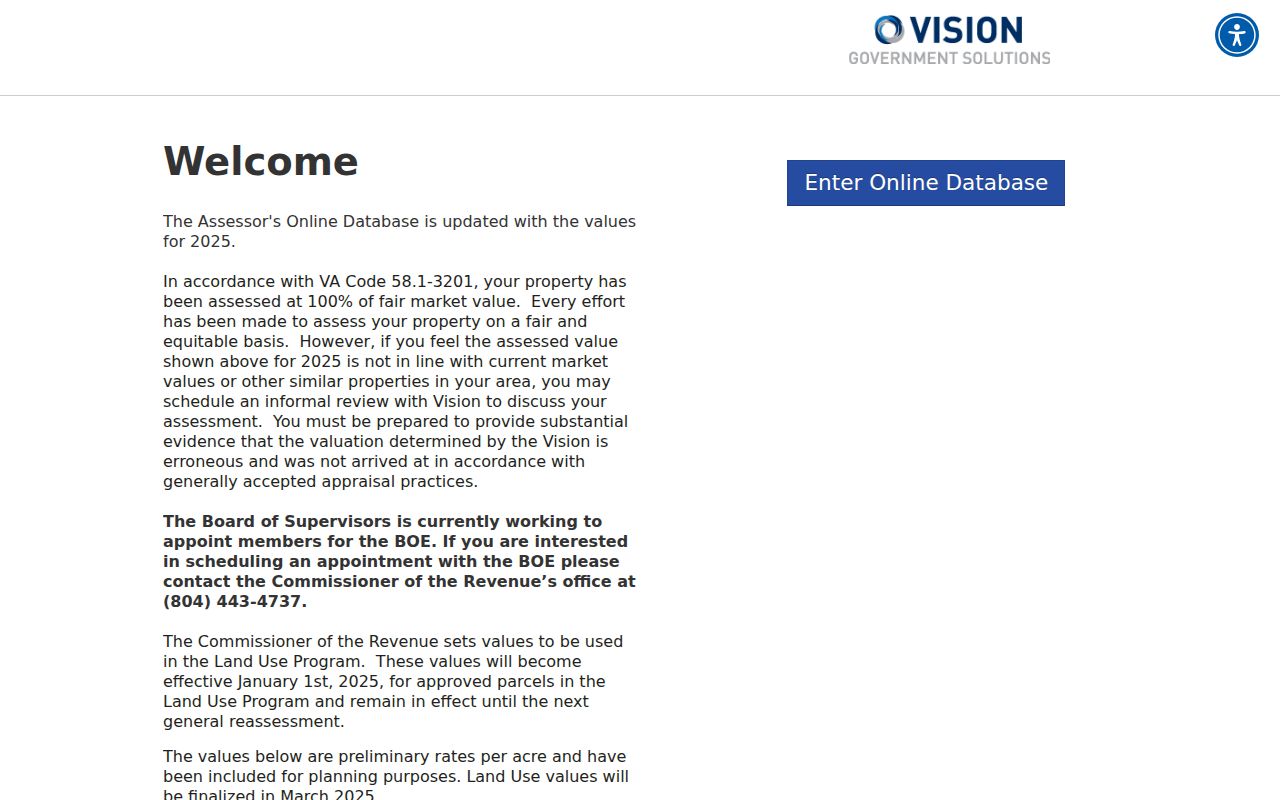
That year marker helps distinguish a current assessment from an older printed land book.
Essex County Tax Records and Due Dates
The Treasurer bills real-estate and personal-property taxes in two halves. The first half falls due June 5; the second, December 5. Payment works in person at 321 Prince Street, by mail to P.O. Box 489, through the WIPP application, or at a 24-hour drop box. Online convenience costs sit outside the tax itself. Card or debit payments add 2.95 percent. E-check adds $1.95, and a returned e-check costs $25.
Check the payment page for current instructions and any remaining balance. A receipt or zero balance answers a collection question only. It says nothing about deeds of trust, judgments, easements, or other interests touching the parcel. The Treasurer posts no delinquent-property list or tax-sale calendar. So ask the office directly about a delinquency or sale. Do not infer one from a silent web result.
The Treasurer's page lists the dates and payment channels. Its notice helps when comparing the online fee against the amount printed on the bill.
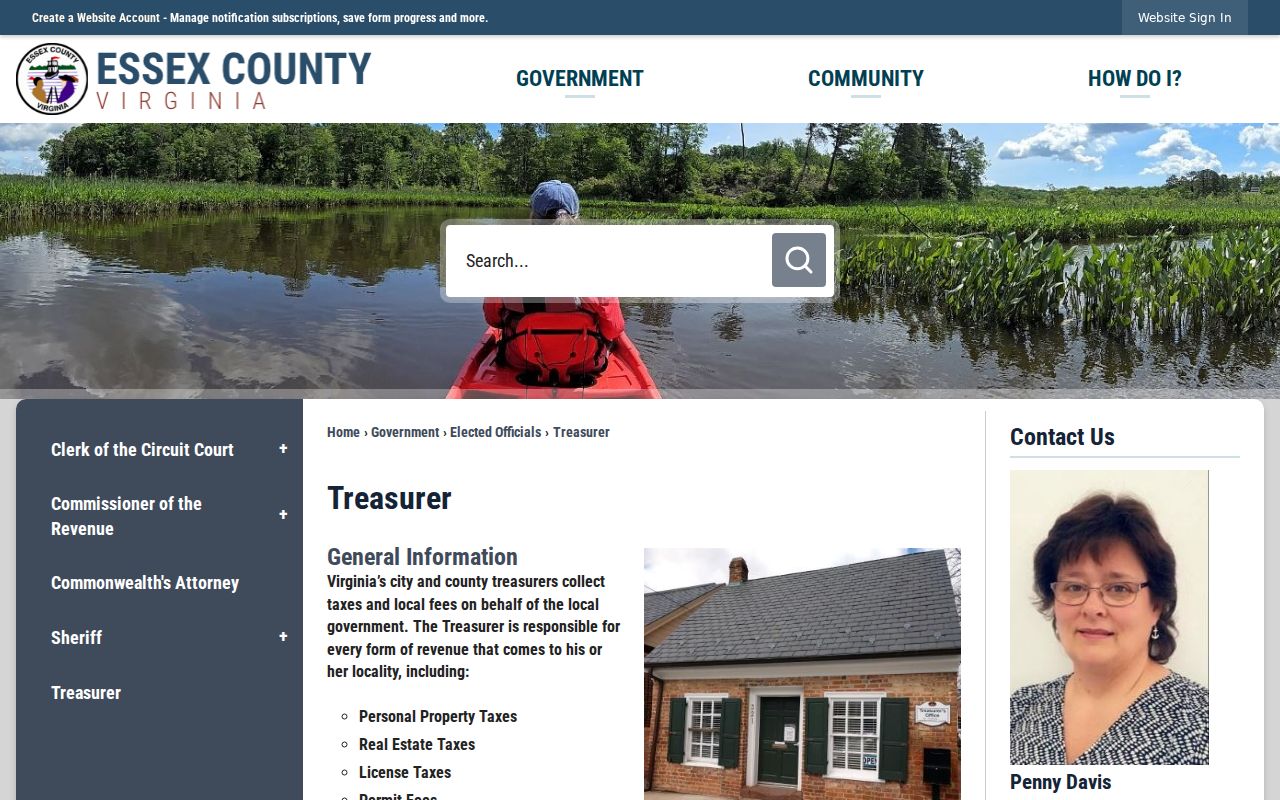
Keep the account number and payment confirmation when following up on a posted balance.
Essex County's Chain Reaches Old Rappahannock
Essex County was formed in 1692 from Old Rappahannock County, and that split matters for anyone tracing a very old conveyance. The Library of Virginia catalog lists Essex deed and wills books starting in 1695, along with early general indexes, land trials, fiduciary records, and an Embrey index that ties Old Rappahannock records from 1654-1692 to Essex records from 1692-1700. A chain that crosses that boundary may need both county names and the combined index.
Keep the catalog in perspective. It is a finding aid, not an online deed portal. It points to the reel or volume to request. Modern searching can reach the most recent recorded instrument, while older entries may take you back to deed books or microfilm. The 1728 courthouse was partly burned in 1814, though the history does not say land books were lost in that fire. Treat the building story as color, not as proof of a records gap.
The catalog also identifies general index runs for 1791-1867, 1867-1904, and 1904-1936, plus deed-book runs that include 1695-1699, 1699-1702, 1702-1718, 1752-1867, and 1867-1901. Those ranges point to the next place to look. They do not promise that a modern online search shows every image. Write down the party name, index type, book and page, and spelling variant before you move from an index volume to a deed book.
The county history page adds the formation story and river-port context, while the archival collection catalog supplies the book and index runs needed to test a much older land chain in Essex County property records.
Use the county transition as a clue for the index, not as an assumption that every old reference survived in one volume.
Requesting Essex County Public Records
Virginia's Freedom of Information Act starts from the opposite of secrecy. Records are open unless a law says otherwise. A good written request names the record with reasonable specificity. Give the parcel address or PID. Include the record type, the party name, and a date range that helps. Charges can apply for access, searching, duplication, and supply costs. When fees are possible, the public body must provide an estimate first. The familiar five working days mark a response deadline. It is not a promise that a sprawling historic production will be finished. Some productions simply run past that window.
Route each request to the right custodian in Essex County. The Circuit Court Clerk holds deeds and plats. The Commissioner of the Revenue keeps assessment material. The Treasurer handles payment records, including the tax roll and tax bill history. A Treasurer contact form carries two warnings worth noting. Submissions may themselves become FOIA records. Sensitive details should never travel through it. That means no Social Security numbers, driver's-license data, medical information, passport details, passwords, tax IDs, or account numbers. Ask the clerk how to obtain a public deed copy instead of emailing anything personal.
One more caution about solicitations. The county archive is a notice route, not a property index. The Essex County public archive can help you locate current notices. Confirm any tax or deed solicitation through an official county phone number. Do this before you act on it.
Skip the unsolicited payment message entirely. Start your tax payment at the Treasurer's page and use its official link.
Limits of Essex County Property Records
Essex County property records have real power. They can document a recorded transfer. They can show an assessment, a tax payment, a parcel reference, or a permit process. But they have limits. No index proves that every interest was ever recorded. A GIS line is a reference tool, not a surveyed boundary. An assessed value is not a sale price. Treating it as one misleads buyers and homeowners alike. Court files may be sealed or restricted. The SRA index does not put every document image online. Before relying on a deed, plat, or appraisal, verify the record. Check it with the office that keeps it.
Lawful use. Use Essex County property information for property research, due diligence, and civic purposes. A records search does not replace a title review or a licensed survey, and owner details must not be used to stalk, harass, or harm anyone.