
Essex County's Former-Owner Record Trail
Essex posts no SRA cutoff year online. The clerk's land-record page is silent on where coverage stops, and COVERS handles indexing and scanning without putting every document online. Older deed records need another route. The Library of Virginia catalog names one. It identifies the county's deed books and general indexes by date, which matters because the online years are undocumented while the catalog gives archival runs with firm names and dates.
| Source | Years It Covers | Where Held | What It Shows |
|---|---|---|---|
| COVERS / SRA index | Current online depth not published | Virginia SRA and Circuit Court Clerk | Indexed party and instrument clues; not every image is online |
| General Index to Deeds 3 | 1904-1936 | Library of Virginia microfilm catalog | Grantor and grantee names |
| Deed books 52-60 | 1867-1901 | Library of Virginia catalog / microfilm | Recorded land instruments in the book run |
| Embrey index | Old Rappahannock 1654-1692; Essex 1692-1700 | Library of Virginia microfilm | Cross-county name trail at Essex formation |
Begin with the latest deed reference. A recent transfer names its book and page. For nineteenth-century ownership, pick the index volume that matches the date and keep grantor and grantee sides apart. Go further back than 1692 and the work splits. Search both Essex and Old Rappahannock with the Embrey index, and since the county's historical depth says nothing about a modern SRA cutoff, ask the clerk where the online record ends for the instrument type you need.
Walk Back from the Essex County Deed
Each step back leans on one clue. It is the prior deed named in the current conveyance. The roles flip as you go. A grantee on one deed turns up as a grantor on a later transfer. That earlier grantor was likely a grantee in the next instrument back. Log each citation carefully. Record the recording date, instrument type, book and page or number, and the legal description for every Essex County deed you touch. A trust, LLC, estate, or life estate sometimes appears. Then search the entity or fiduciary name alongside the individual.
- Locate the deed into the owner named on the parcel card and check that its legal description matches the land.
- Copy the grantor, grantee, recording date, deed type, and prior deed reference.
- Search the prior grantor as grantee in an earlier date range, then open the cited volume or image.
- When SRA no longer covers the needed record, switch to the matching general index, deed book, microfilm, or clerk inspection route.
- Grantor
- The party who conveyed the described interest.
- Grantee
- The party who received the described interest.
- Chain of title
- The linked sequence of conveyances for the same land.
- Legal description
- The land identity that can remain useful when a street address changes.
How Far Essex County Deed Records Reach
Essex County was formed from Old Rappahannock in 1692. The Library of Virginia catalog traces Essex deeds and wills back to books covering 1695-1699, plus a 1699-1702 book and early general indexes. Its combined Embrey index reaches across the county line, covering Old Rappahannock from 1654-1692 and Essex from 1692-1700. A former-owner search that crosses that line needs both jurisdictions in the plan.
Resist reading a records gap into the courthouse story. The 1728 courthouse was partly burned in 1814 and later remodeled as Beale Memorial Baptist Church, yet the sources do not say Essex deed books were destroyed. Follow the actual book and index runs in the catalog instead of inferring a gap from the building's history.
Lawful use. Use prior-owner research for house history, title diligence, estate questions, and property research. Do not use an owner's name or mailing address to stalk, harass, or harm anyone.
Essex County's 1791-1936 Name Indexes
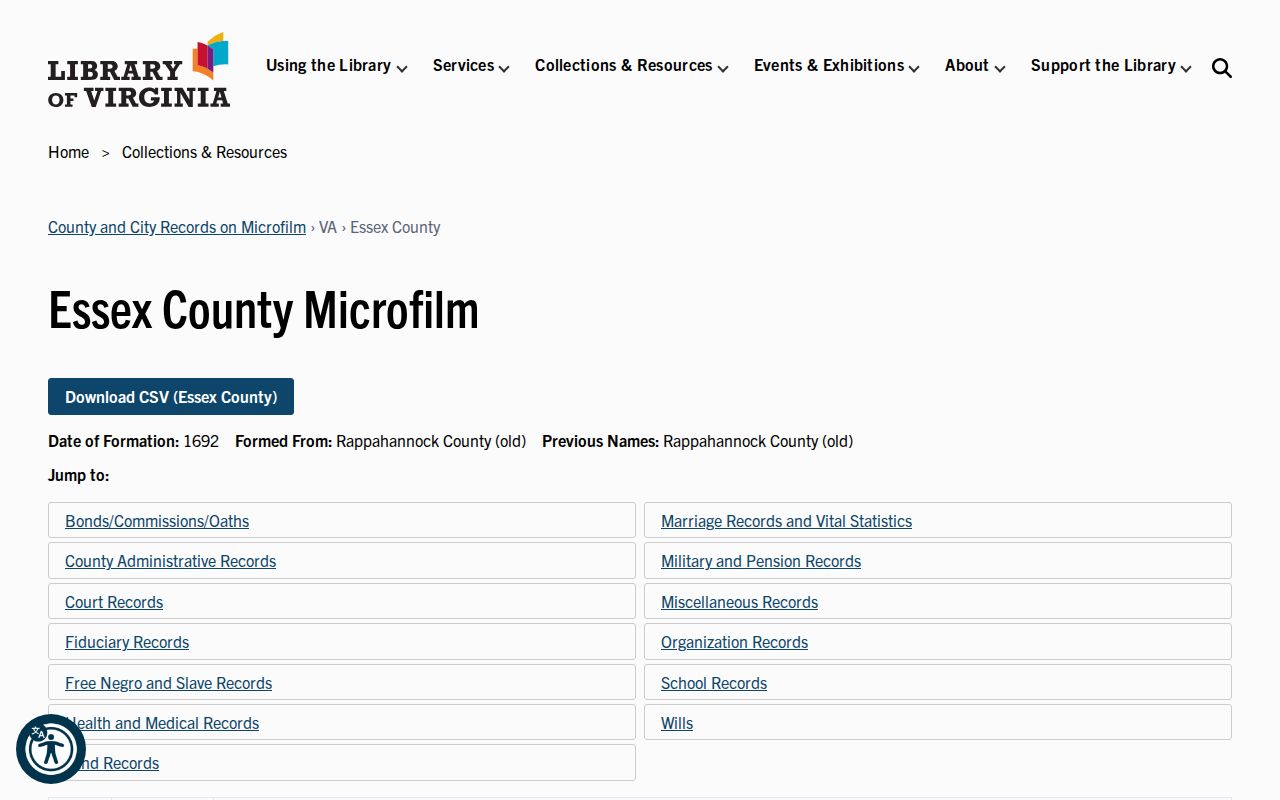
Essex County deed research before 1936 rests on three name indexes. The Library of Virginia catalog lists General Index to Deeds 1 for 1791-1867, General Index 2 for 1867-1904, and General Index 3 for 1904-1936. Each volume picks up where the last one ends. A search that crosses 1867 must move from the first index into the second. A chain crossing 1904 shifts again to the third. Grantor and grantee sides stay separate, since one person can show up in both roles across the decades.
Once an index gives a book and page, the catalog points to the matching deed-book run. Record the index title and date range beside every citation. That habit makes a later lookup easy to repeat. The Essex microfilm catalog lists the general index runs and their corresponding records.
Grantor and grantee indexes are two views of one transfer, but they run in opposite directions. Working backward means starting with the grantee who received the land, locating the deed that delivered it, then hunting that earlier owner as a grantee once more. Keep the legal description next to each citation, because a shared name alone can point to a different parcel or a partial interest. When a book reference is murky, copy the exact index title and volume for the archivist or clerk. The Library of Virginia's Essex catalog displays the index and microfilm references shown here.
That 1936 date marks the end of a verified archival index, not a stated cutoff for today's SRA portal.
Essex County Deed Books Before the Index
The catalog breaks the earliest Essex material into short book runs. These include deeds and wills books 9 and 10 for 1695-1702, then books 11-15 for 1702-1718. A long span follows, volumes 26-51 from 1752-1867, and then books 52-60 through 1901. Not every year fits one volume. So rely on the catalog's volume-level description rather than guessing the book number. It also notes early transcripts and original pagination that help reconcile a citation. Retain the book number and page reference. An index entry may use a different display format from the reel or bound volume.
Access depends on the item. Some records sit on library microfilm. Others sit in clerk-held books. The county land-record page remains the local contact for public inspection and copies. The Essex Circuit Court Clerk can confirm where a particular volume or document is available.
Search Old Rappahannock Before Essex
Some conveyances predate Essex itself. When Essex County formed in 1692, older land records stayed indexed under Old Rappahannock County. The Embrey index covers Old Rappahannock from 1654 through 1692. It continues with Essex from 1692 through 1700. Search the owner's name under whichever county existed at the time. Then use the land description to tie the older entry to later Essex deeds.
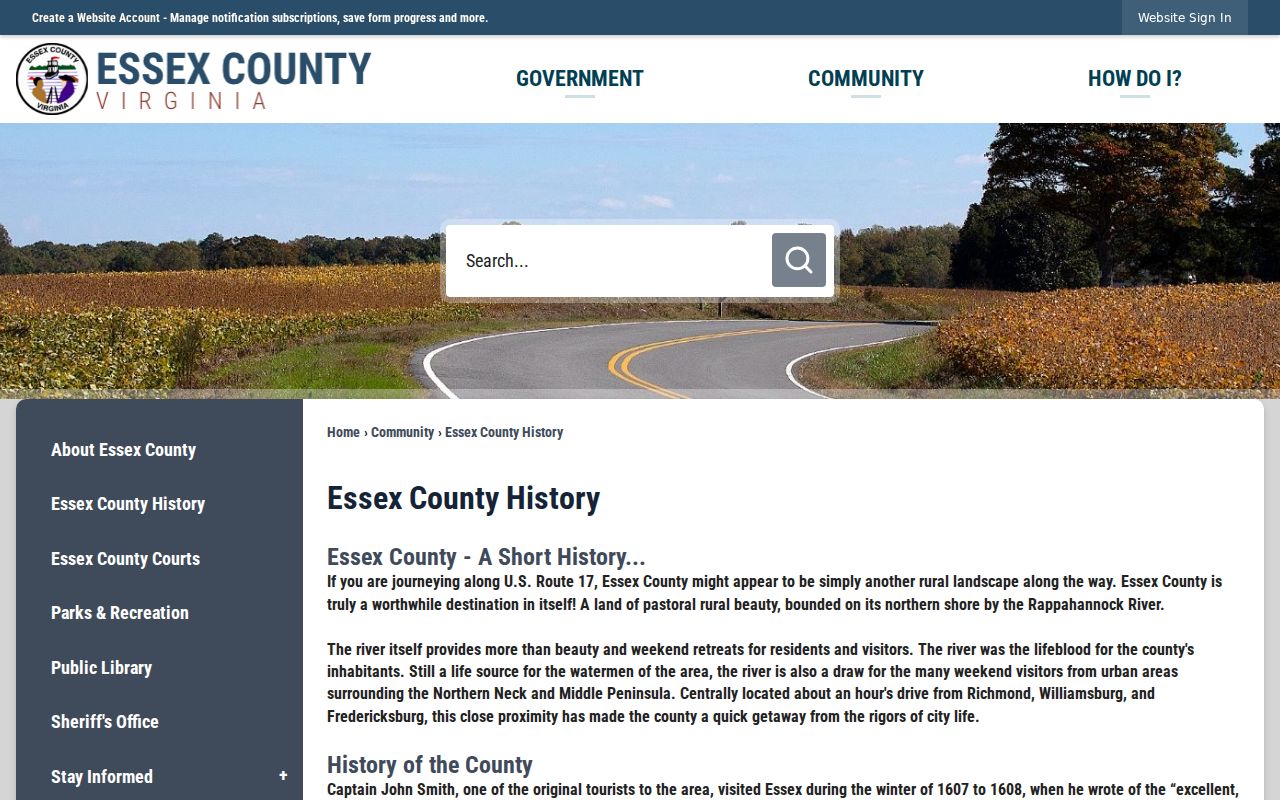
One wrinkle remains. The earliest Essex books in the catalog start in 1695, not 1692. That gap explains a common puzzle. A chain can show an index reference from one county and a later deed book from another. For formation context, the county's history page covers the local timeline.
Keep the county name and date with every early index entry.
Essex County Estate Transfers in the Chain
A prior owner did not always sell the land. Some left it through an estate. The catalog lists wills, fiduciary accounts, and related indexes. A chain may also cite an executor or administrator deed, deed of distribution, life estate, or an order authorizing a sale. When a normal grantee-to-grantor step is missing, search the person's name in both the land index and the fiduciary or probate records.
A death certificate alone proves nothing about title. A probate order can authorize a transfer. But the recorded conveyance or clerk-confirmed estate instrument holds the actual land description and the parties involved. Essex fiduciary indexes and wills run on their own date ranges. Identify the right item through the Library of Virginia catalog before requesting a reel.
Essex County Land Trials and Chancery
Not every land question shows up in a deed sequence. The archival catalog includes Essex land trials from 1711-1760 and 1790-1818, trustee deed-of-trust settlements from 1889-1940, and chancery indexes spanning 1850-1948. These files can explain a boundary dispute, a partition, a fiduciary sale, or a title question that the deed records leave unclear. They supplement the chain of title. They never replace the recorded conveyance itself.
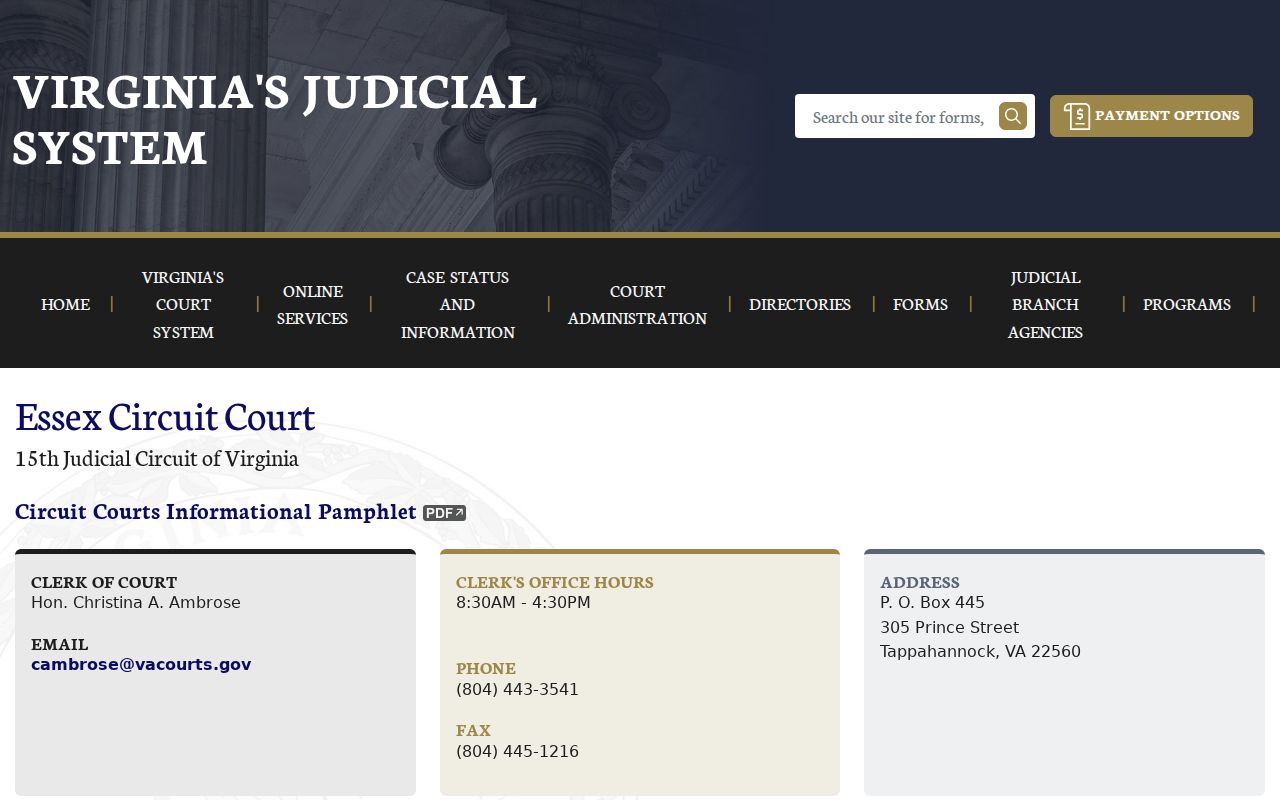
Start with the parcel's legal description and any name or court reference in the deed, then identify the correct index run. The Essex Circuit Court page links statewide case information, though the live field set may vary. For an old case or a file not visible online, ask the clerk how to inspect the docket or related papers. The Essex Circuit Court page gives the clerk contact route.
A court order can explain a transfer path. The deed still verifies the conveyance itself.
Tappahannock's Older Lot References
Older Tappahannock conveyances rarely read like modern deeds. They may cite half-acre lot numbers, a slip lot reaching the Rappahannock River, or adjoining owners instead of a street address. The town also went by Hobb's Hole and New Plymouth. The name returned to Tappahannock in 1705. Those older terms can surface an entry that a present-day parcel search misses.
Pair the historic name or lot with the deed's metes-and-bounds calls. Then compare the location against the current GIS parcel and legal description. Original street names still help with house history. These include Prince or Main, Church, Queen, Cross, Water Lane, Duke, and Marsh. Treat a landmark as a search lead. It is not proof of ownership.